
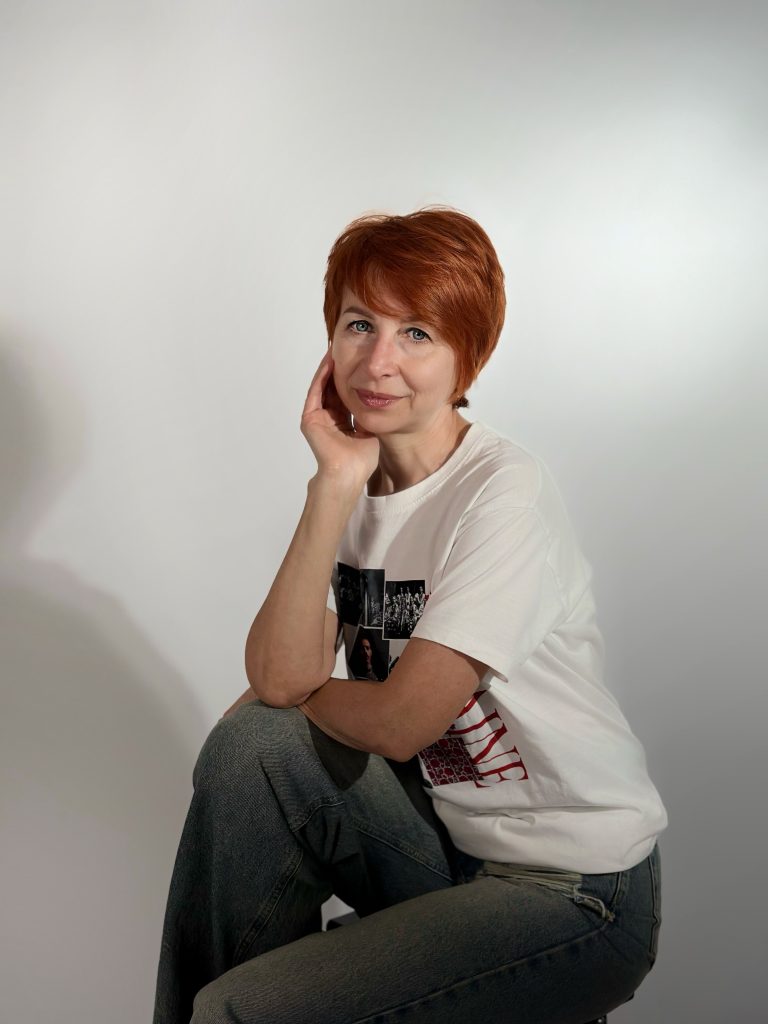
Teacher of the "Bakers" and "Confectioners" courses at the Adult Education Center
Tell us about your experience
How did the idea of launching the "Bakers" and "Confectioners" courses come about, and why is this area so important for your community today?
For over 30 years, I have been training future chefs, confectioners, bakers, and bartenders. During this time, I have graduated hundreds of specialists who are now successfully working in Ukraine and abroad.
I am constantly improving myself and implementing modern teaching methods. I am most happy when I see my students become successful and find a job they love.
Since the beginning of the war, many people have lost their jobs or moved to our community in search of a new profession. In response to these needs, the Voznesensk Community Foundation launched courses in various areas, and I was offered to teach bakers and confectioners. These are always in demand professions. People need bread and pastries in any circumstances, and they also open up opportunities for work or their own business.
Today, these courses are a chance to regain self-confidence, gain new skills, and take a step towards a new life. Our students include IDPs and people who have changed their professions due to the war. The courses help them become economically independent, and local businesses gain qualified employees.
"When you knead the dough, it's like you forget about your worries"
The smell of fresh bread and pastries is associated with home. Do you notice that for the participants, these classes have become a kind of therapy and a way to regain peace of mind?
Yes, absolutely. For many participants, especially IDPs, these courses have become much more than just training.
The smell of fresh bread is associated with home and security, and for people who have lost their usual lives due to war, such simple things have special value. During the classes, they not only learn to bake bread, but also gradually restore their inner balance, communicate and support each other. For example, Ms. Tetyana (IDP) hardly communicated with anyone, but when she came to the courses, she “came to life”.
I remembered the words of the participants: “Today I felt calm for the first time in a long time” or “When you knead the dough, it’s like you forget about your worries”.
I wouldn’t call our courses therapy. Their goal is different – to give you a profession. But the atmosphere of mutual support and joint work really helps people regain faith in themselves.
Who are your students? How many of them are local residents, and how many have found a new home in your community?
Our students are very different women and men, united by the desire to change their lives. Among them are both local residents and internally displaced persons who have started life anew in our community.
One group consists of 5–6 people. In total, 34 students have completed the training since last year. These are both local residents, a boy with a disability, women, family members of disabled people, and wives of military personnel. Despite their different experiences, they quickly find a common language, support each other, and within a few days become a real team.
For me, the most important result of the course is not just a certificate, but the smile of a person who has once again believed in their future.
Baking bread together brings the girls closer together. How quickly do the girls find a common language and do they stay connected outside of the kitchen?
Yes, this is one of the most pleasant features of the courses. Making bread or pastries together brings people together: participants communicate, share experiences and recipes, and barriers disappear from the first classes.
Communication does not end after the course. I created a joint chat where girls support each other, exchange photos of their products and share successes. Some meet outside of training.
This is one of the most valuable results of our work. We not only teach the profession, but also create a space of trust and support.
Do you teach girls not just to cook according to recipes, but to turn this skill into a tool for earning money?
Yes, this is exactly the approach I am taking. It is important not only to teach how to bake bread or pastries, but also to show how to turn these skills into income.
I talk about trends, product quality, pricing and custom work, explain how to find your first clients and present your products.
For many students, especially IDPs or women who have lost their jobs, this is a real path to financial independence. From custom baking to your own mini-bakery.
I always tell my students: “A profession is not just a certificate, but a tool that gives you work, income and confidence in the future.”
I came here to learn how to bake bread, but I found much more - self-confidence
Share a story that moved you or was most memorable?
One moment in particular stood out to me. A participant who had just lost her job and her husband was on the front lines came up to me in tears and said, “I came here to learn how to bake bread, but I found so much more—belief in myself.”
Many of the participants have gone through difficult circumstances, and when you see how with each class they become more confident and proudly show off their first bread or cake, you realize that your work is meaningful.
The greatest reward for me is not beautifully baked bread, but the eyes of people who see hope again.
Are there any real successes among graduates of previous streams or current participants?
Yes! Some participants are already taking their first orders for baking - bread, cakes, desserts, first for family and friends. Some plan to get a job in catering, and some dream of starting their own business - I support these aspirations with recipes and advice.
It is especially touching that some are already baking for the military, volunteer events, and charity fairs. This proves that knowledge can not only bring income, but also unite people around good deeds.
Community impact and sustainability
The project is being implemented, among other things, with the support of the National Network for the Development of Local Philanthropy. Why, in your opinion, are community foundations the best at understanding and supporting such practical, down-to-earth initiatives?
Community foundations understand people's needs best because they work alongside them and see real challenges. They support initiatives that produce concrete results: helping people acquire a profession, find a job, or restore their faith in themselves.
It is thanks to such support that our courses have become a reality, and I am sincerely grateful to the foundation for their trust.
How do you see this project developing? Is there a dream to turn these courses into a permanent social bakery or cooperative in the community?
I don't want this project to end with one course. My vision is a permanent platform for professional training, where people of all ages can get a profession and a chance for a new start.
In the future, I would like to create a community of graduates who come together for charitable initiatives: baking for socially vulnerable groups, the military, or local events. This not only provides a profession, but also strengthens the community.